Since their debut in the 1920s, Poul Henningsen’s three shade lamps have embodied a perfect harmony of form and function. Defined by a distinctive numbering system, these designs reflect Louis Poulsen’s enduring commitment to innovation and craftsmanship.
Since their debut in the 1920s, Poul Henningsen’s three shade lamps have embodied a perfect harmony of form and function. Defined by a distinctive numbering system, these designs reflect Louis Poulsen’s enduring commitment to innovation and craftsmanship.
The Numbering System: A Design Language
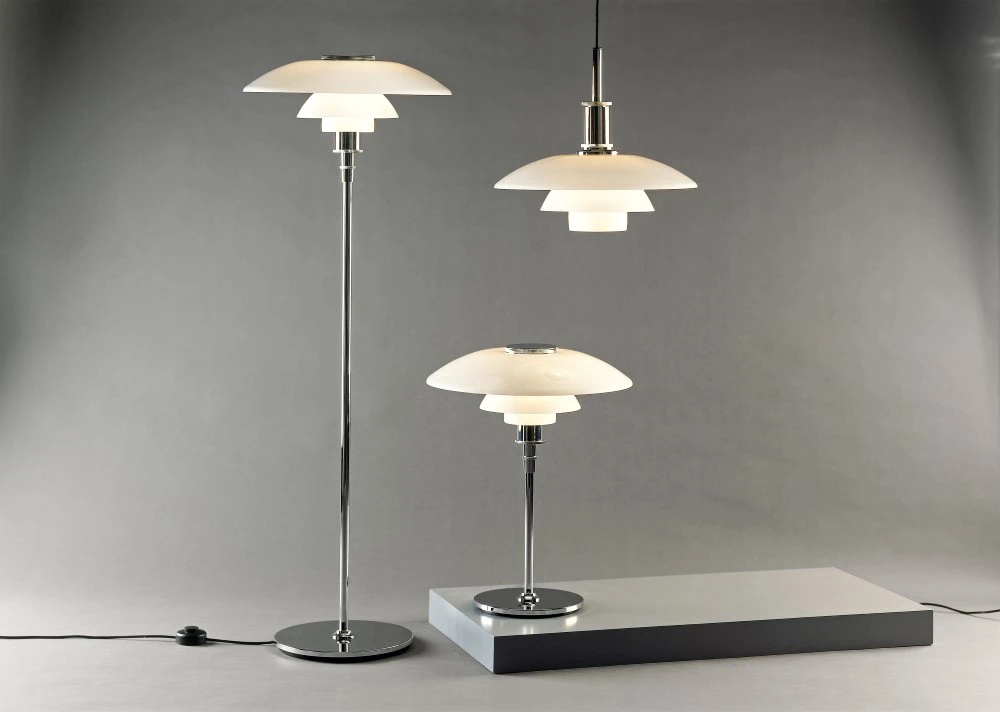
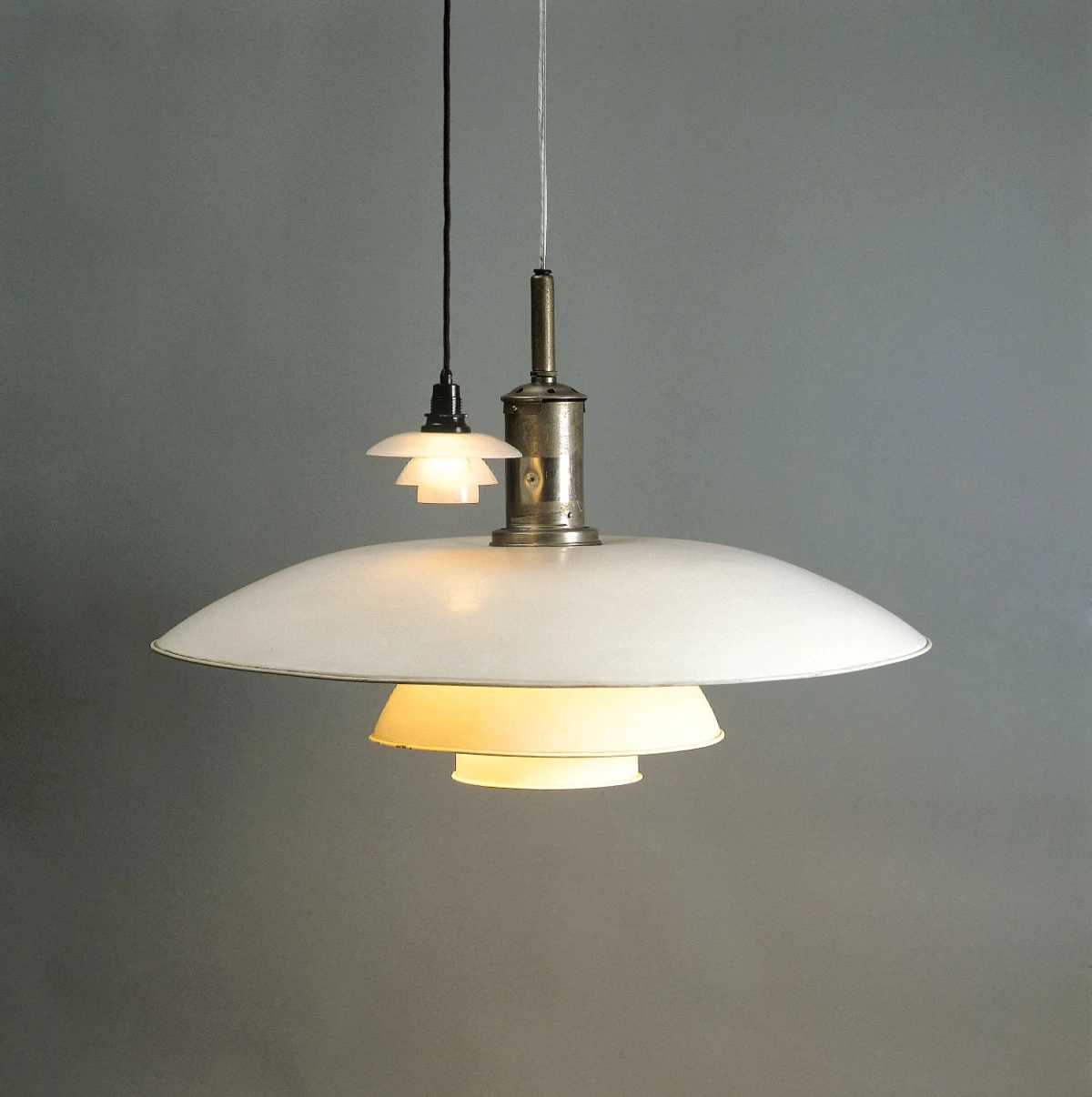
Each PH lamp is identified by a two-part number that corresponds to the dimensions of its shades. The first digit represents the upper shade’s diameter in decimeters (e.g., “3” for 30 cm), while the second indicates the size of the middle and lower shades. This system ensures a balanced, lightweight aesthetic that maintains visual harmony.
Notably, the two lower shades always remain paired and are derived from the upper shade of a corresponding even-numbered model. For example, the lower shades of a PH 4/3 originate from a PH 3/3, while its upper shade comes from a PH 4/4. To maintain proportionality, size increments rarely exceed two steps—hence, a PH 8/5 would not exist, but a PH 8/6 would, preserving the lamp's elegant coherence.
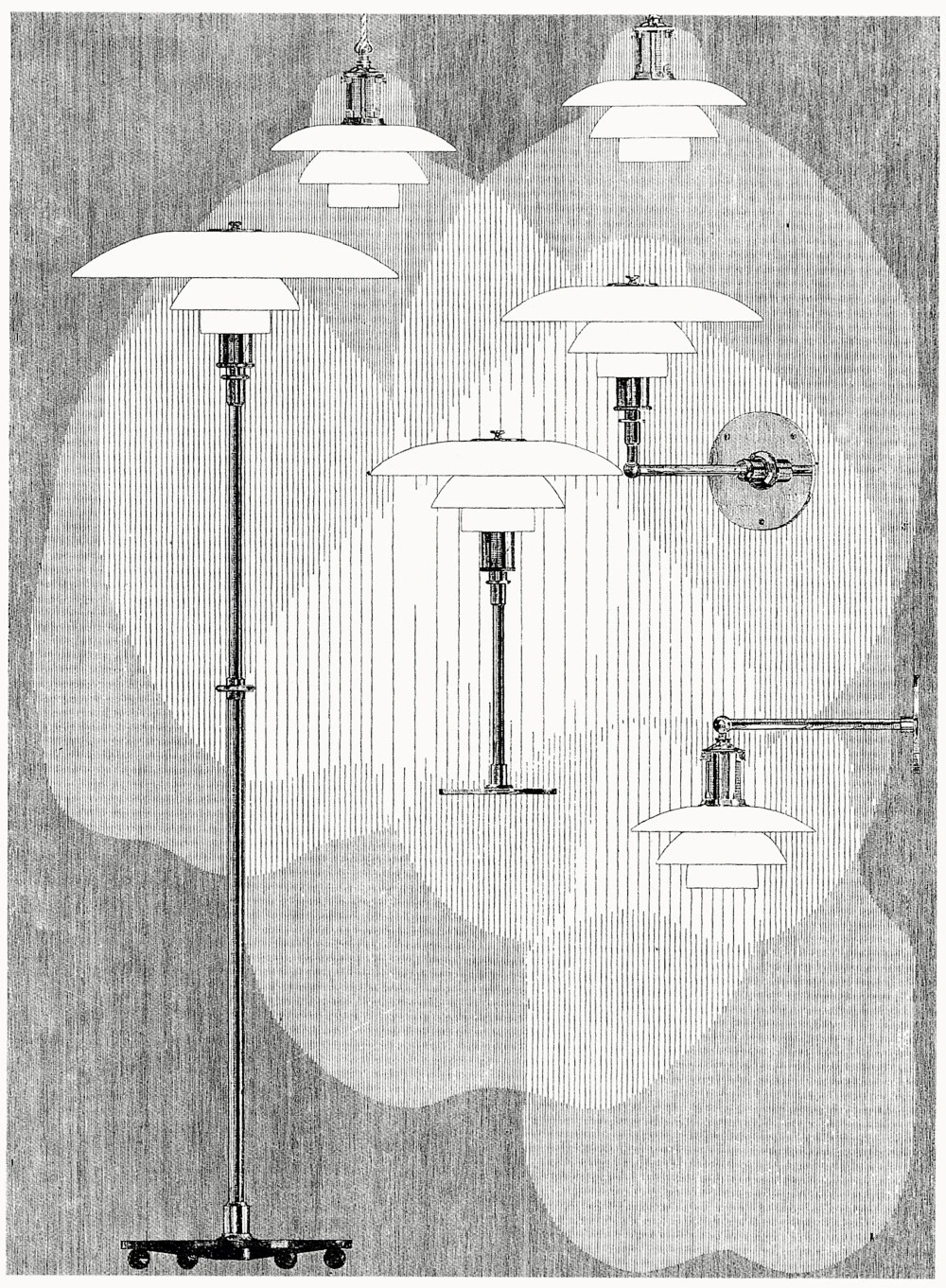
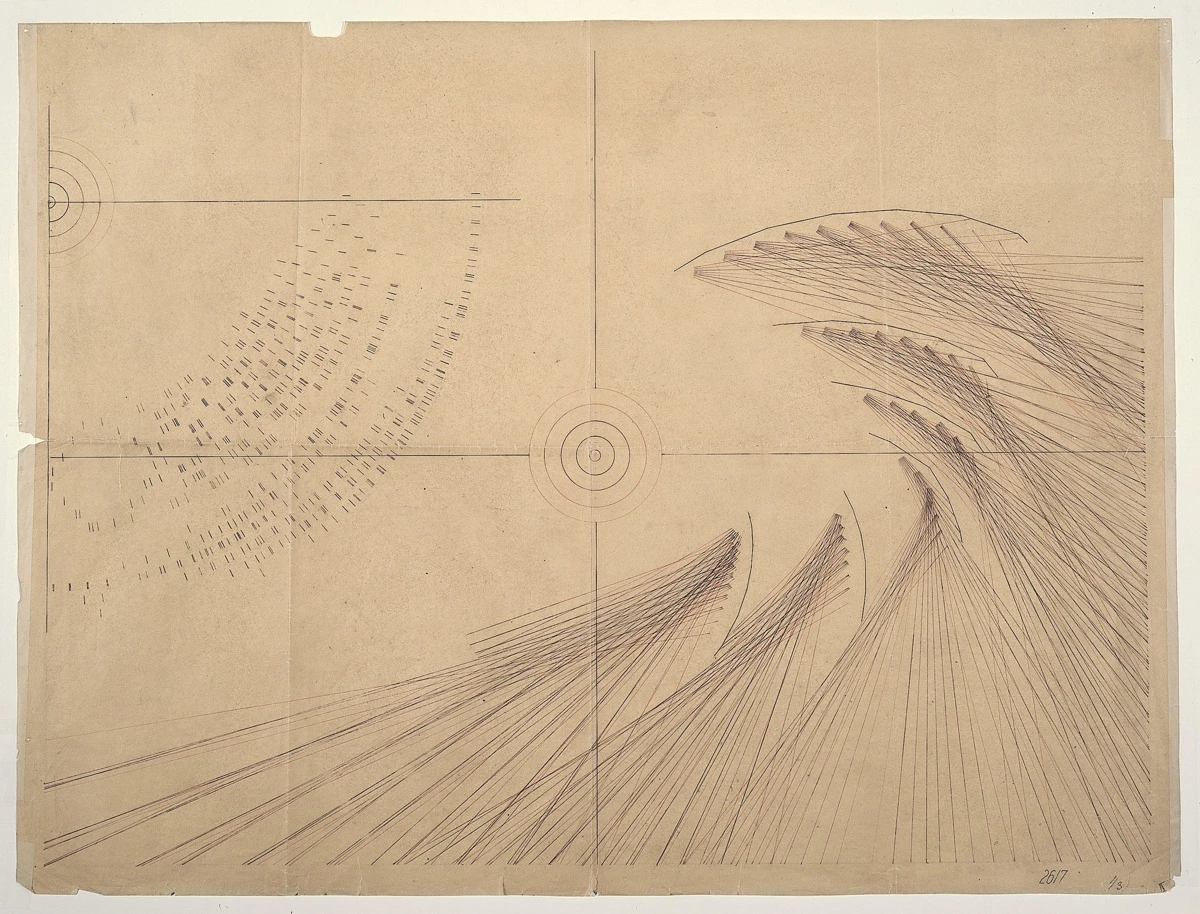
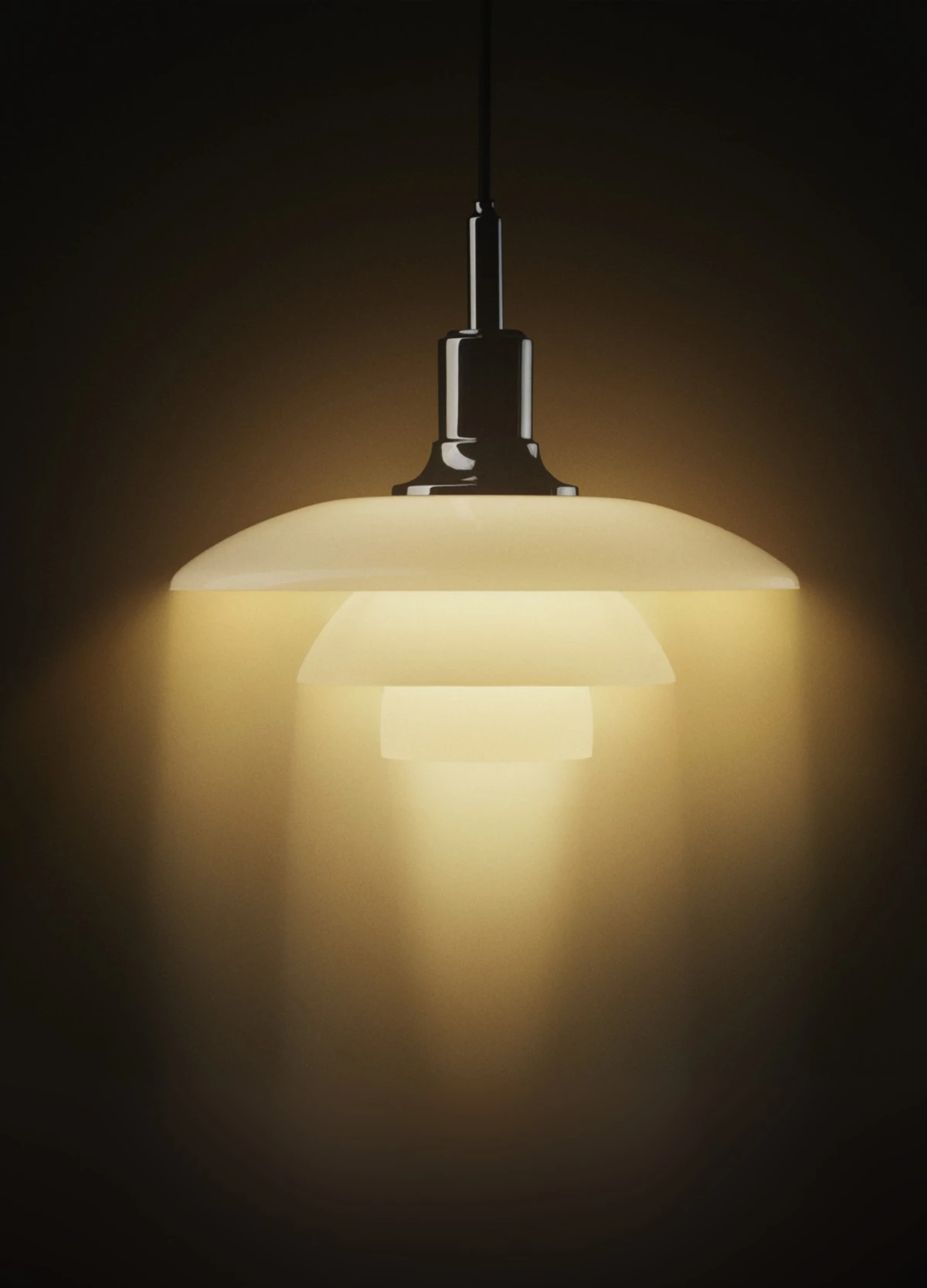
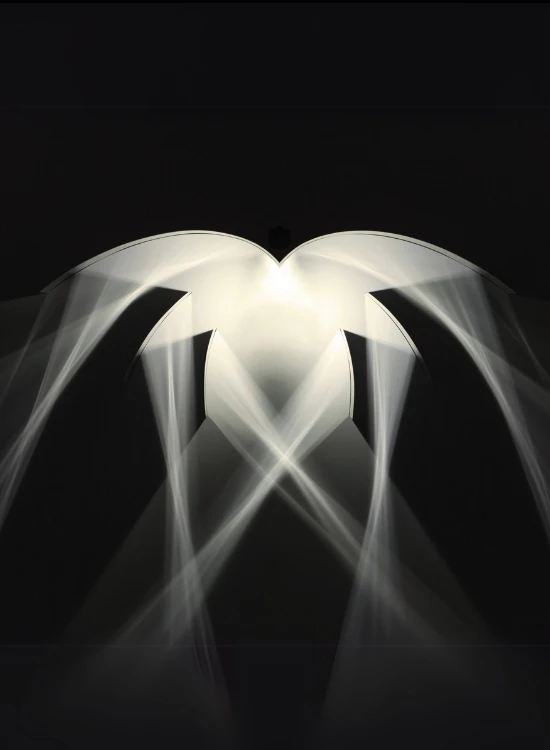
At the heart of the PH system lies the logarithmic spiral, a natural curve also found in seashells and plants. By shaping the shades according to this geometry, Poul Henningsen created a lamp that distributes light in gentle layers, free from harsh contrasts.
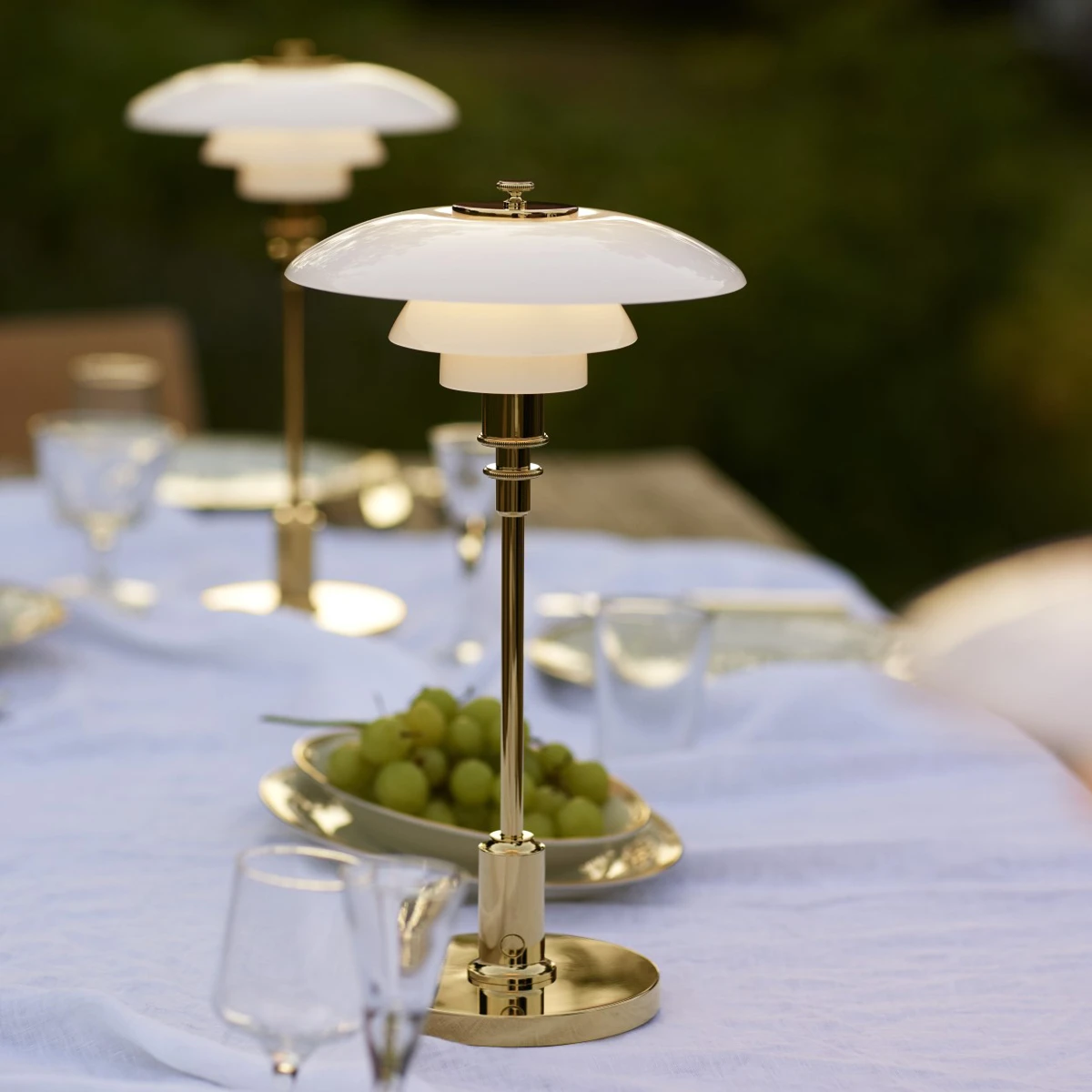
The top shade takes care of the brightest light, the middle shade redirects and softens it, and the bottom shade shields the eyes from glare. Together, they create a warm, balanced illumination that feels as natural as daylight and as inviting as candlelight.
Solving glare with layered light
Before the PH system, lighting typically meant discomfort. Bare bulbs cast harsh, uncontrolled light that strains the eyes. Simple shades offer softer illumination, but often still leave glaring escape paths.
The PH three-shade system softens and balances light, delivering layered illumination that feels both comfortable and elegant.