Enjoy free delivery and free returns on all lamps
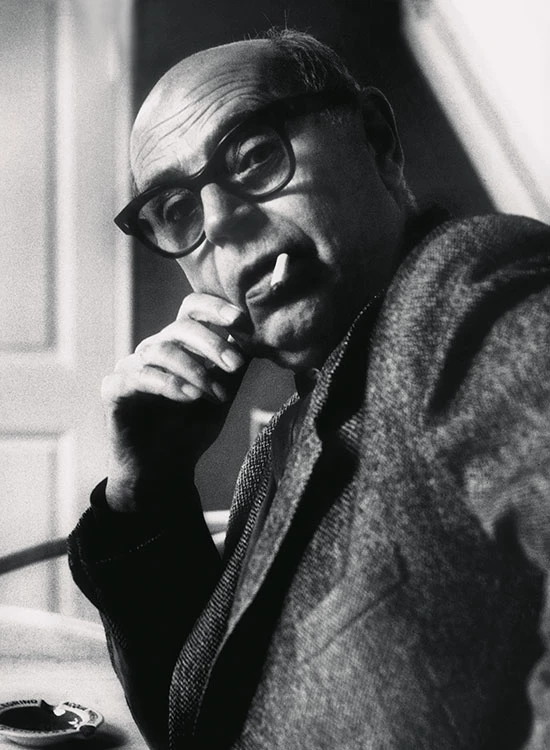
Poul Henningsen working at desk with PH vintage table lamp, © 2025 Louis Poulsen.

Understanding the System PH

Since 1926, Poul Henningsen’s three-shade system has defined the way we think about light. It was created to solve a simple but pressing problem: how to enjoy bright, functional light without the harsh glare of a bare bulb.
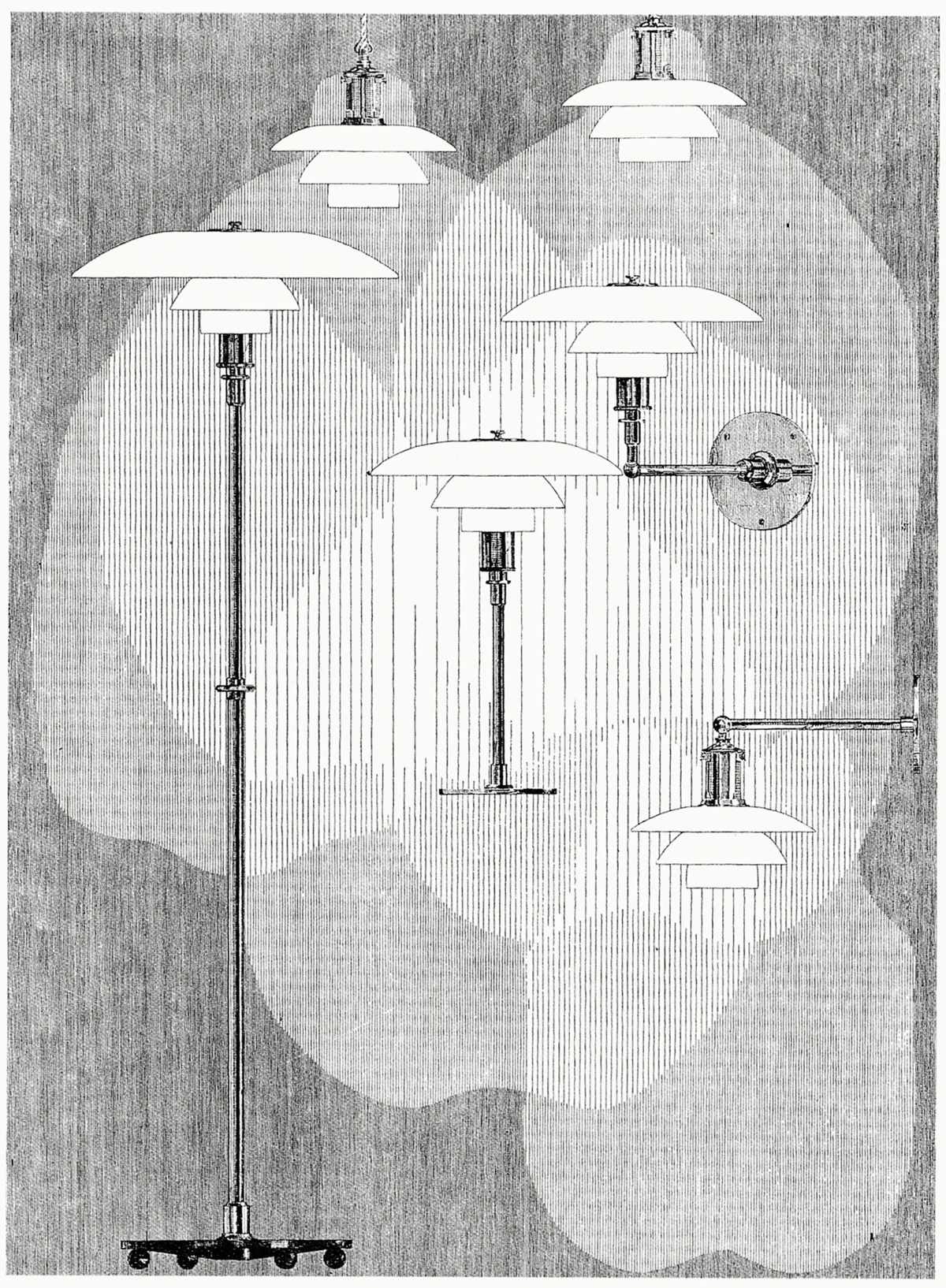
Vintage illustration of several PH light designs, showing how their shades distribute light.
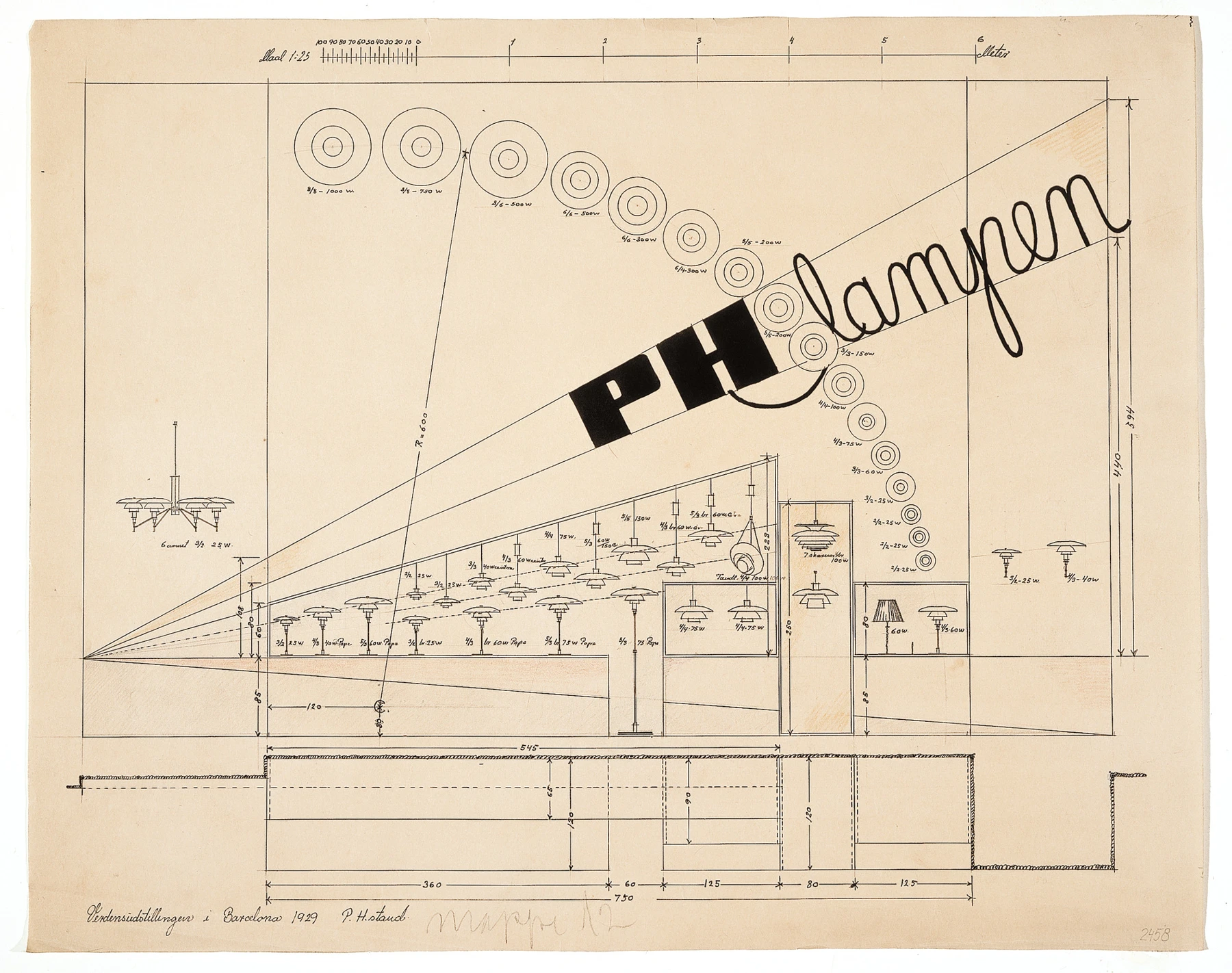
Architectural drawing of PH lamp exhibition stand in Barcelona 1929, © 2025 Louis Poulsen

This early drawing shows the variations of the three-shade lamp, demonstrating the precision and thoughts behind each model.

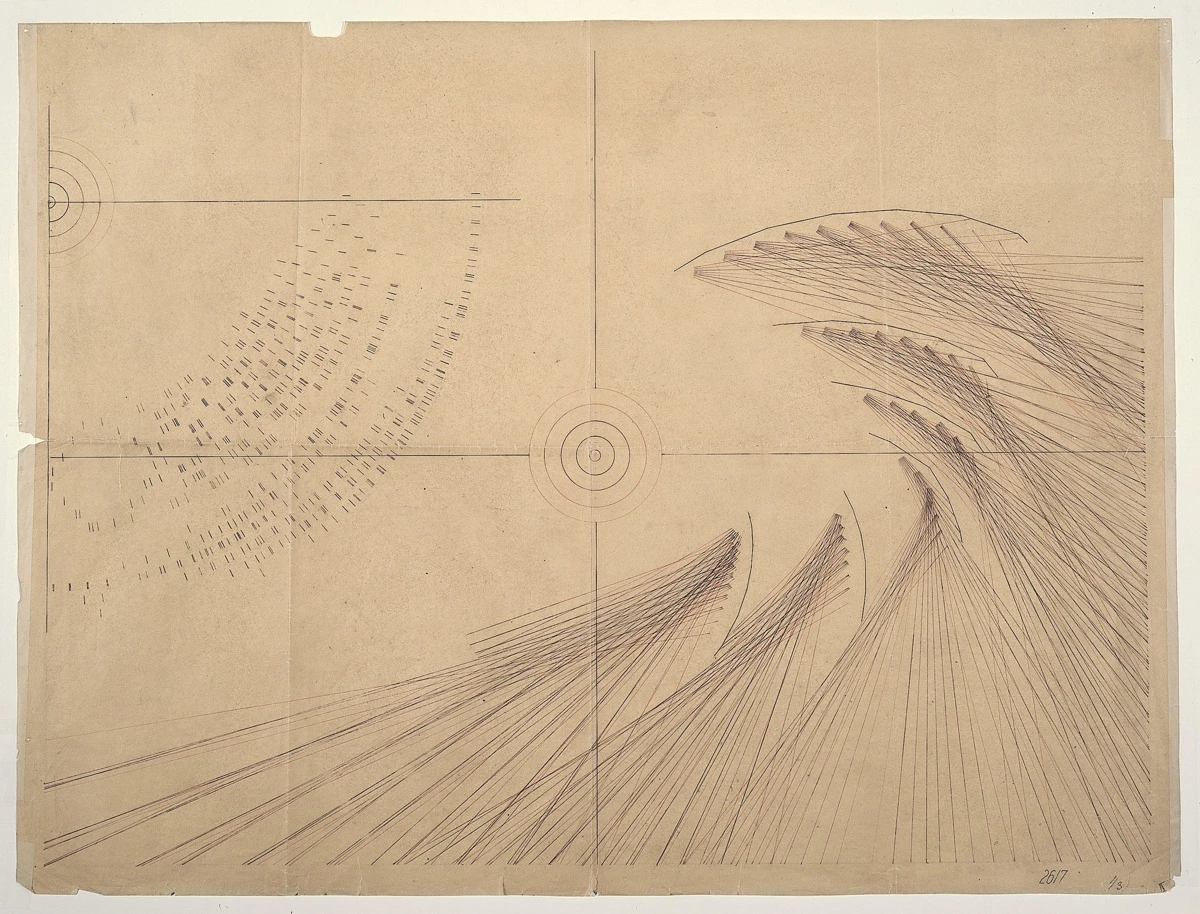
Light distribution study drawing for PH lamp design on aged paper, © 2025 Louis Poulsen.

The principle behind the design

At the heart of the PH system lies the logarithmic spiral, a natural curve also found in seashells and plants. By shaping the shades according to this geometry, Poul Henningsen created a lamp that distributes light in gentle layers, free from harsh contrasts.

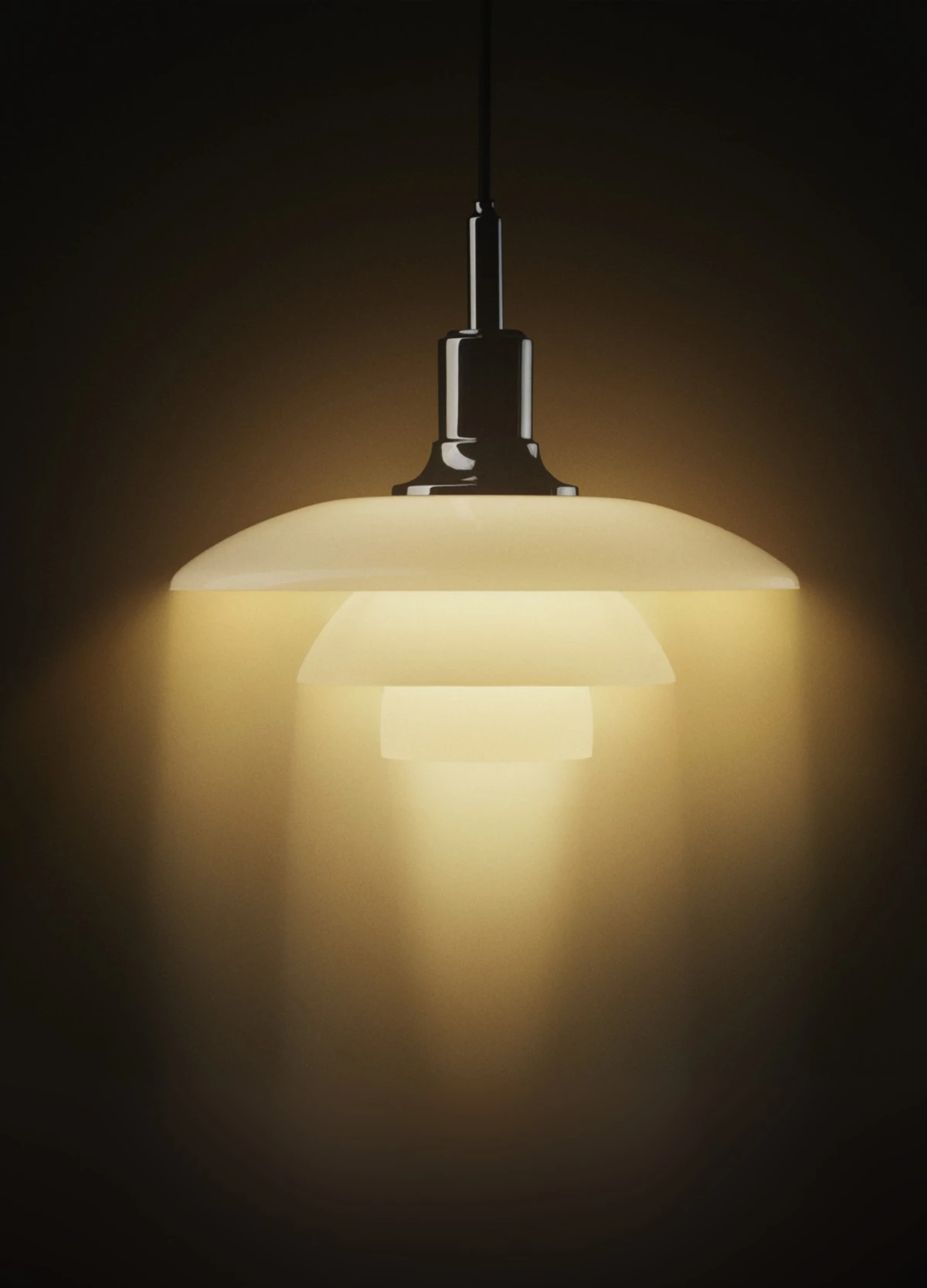
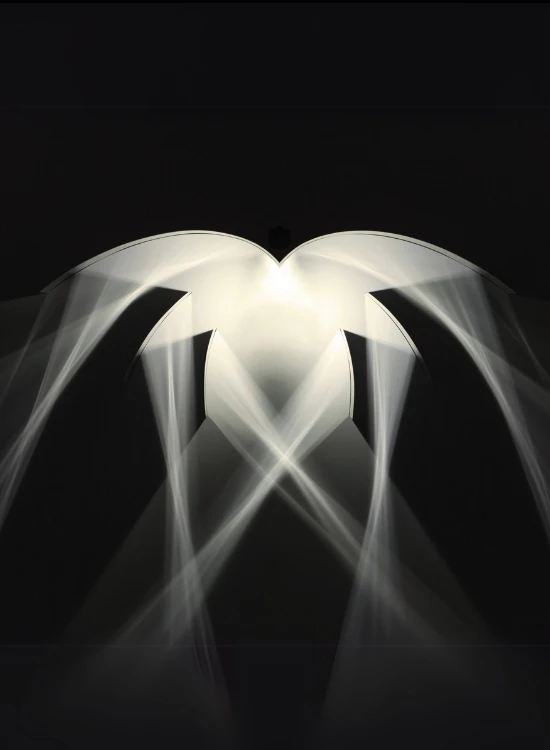
The top shade takes care of the brightest light, the middle shade redirects and softens it, and the bottom shade shields the eyes from glare. Together, they create a warm, balanced illumination that feels as natural as daylight and as inviting as candlelight.

PH 3/2 pendant lamp glowing warmly in the dark, © 2025 Louis Poulsen.

Solving glare with layered light

Before the PH system, lighting typically meant discomfort. Bare bulbs cast harsh, uncontrolled light that strains the eyes. Simple shades offer softer illumination, but often still leave glaring escape paths.

The PH three-shade system softens and balances light, delivering layered illumination that feels both comfortable and elegant.