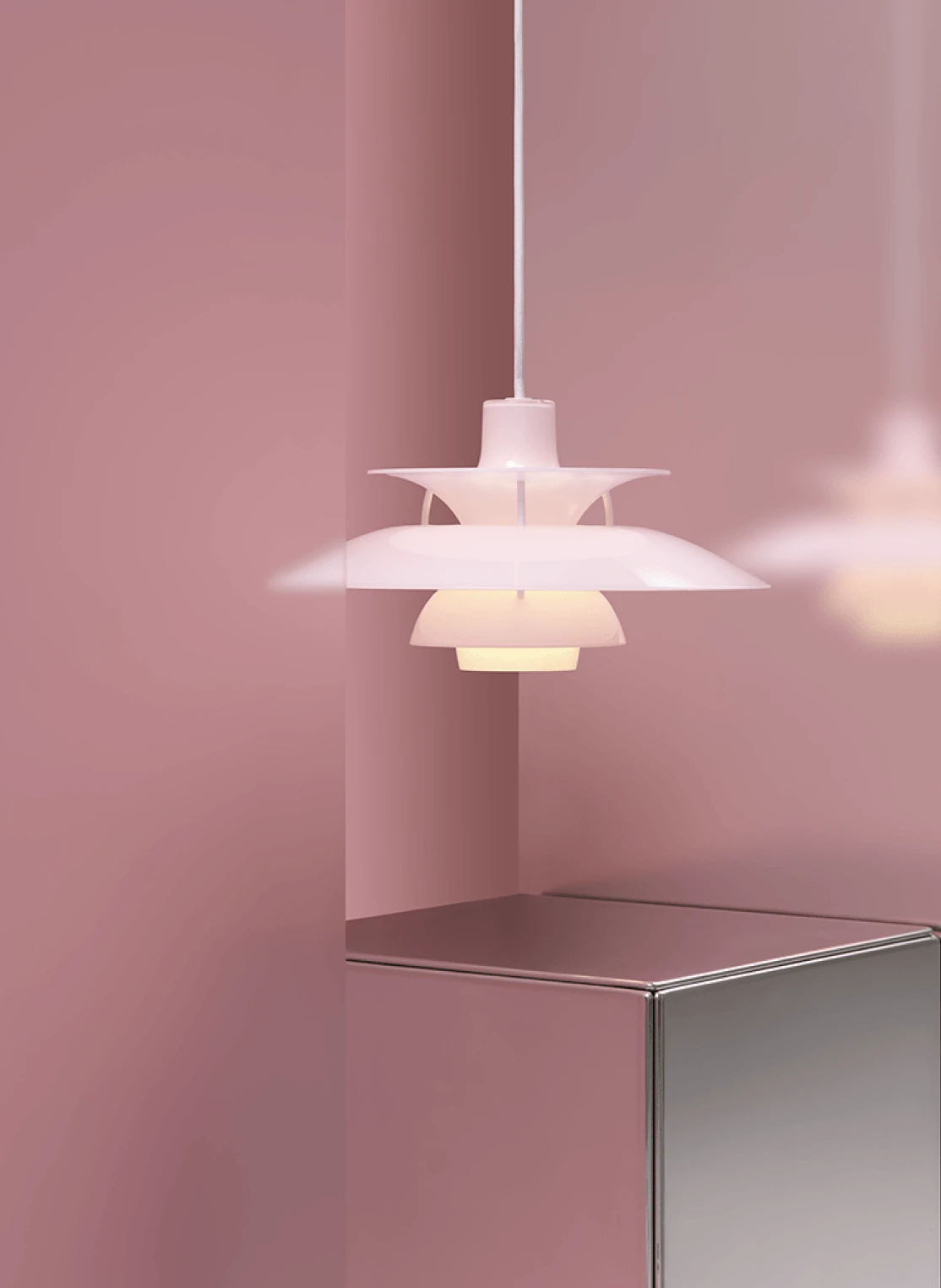
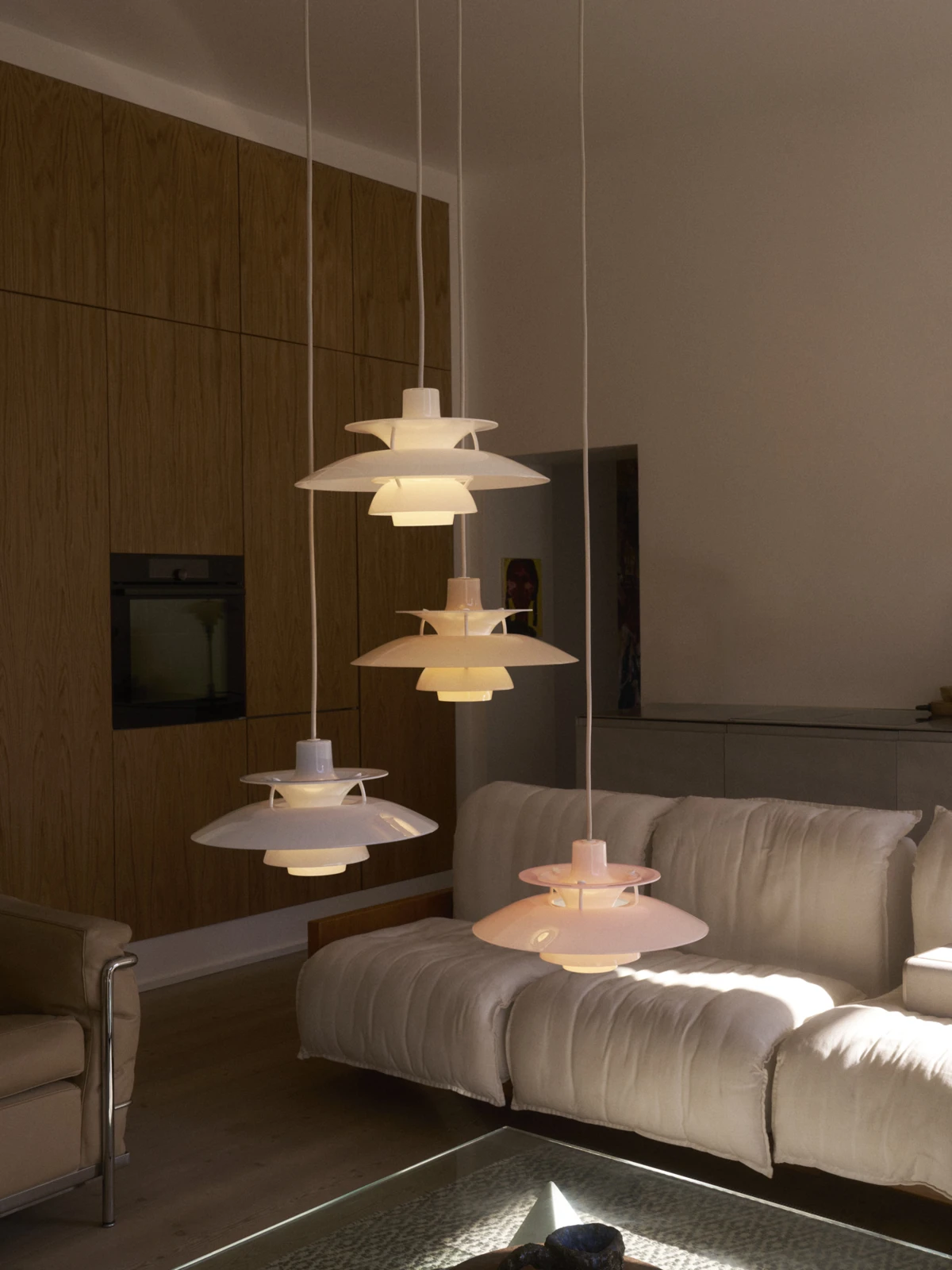
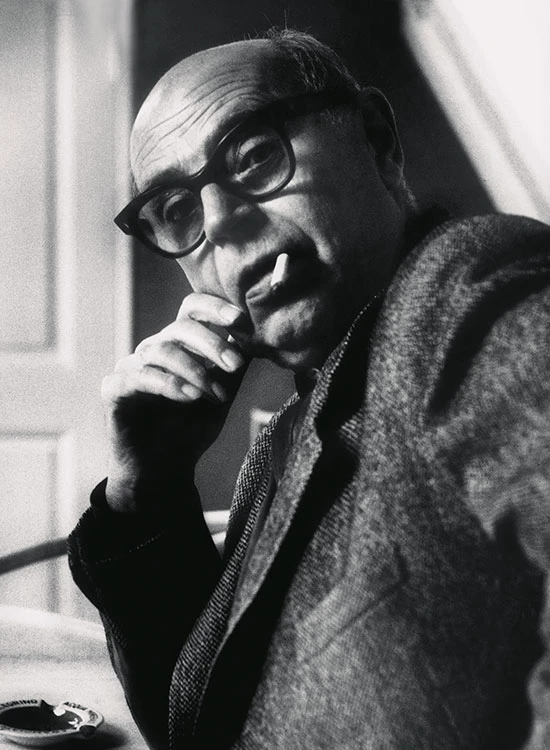
Danish writer, designer, and architect Poul Henningsen (1894-1967) had a vision – to capture the golden hour. In 1958, he created the PH 5 in response to incandescent bulbs and the constant changes in their shape and size and the consequent risk of glare – something PH wanted to avoid. The result was a striking and versatile lamp that could accommodate any bulb. This soon became the PH lamp in Denmark, used in public buildings and private homes.
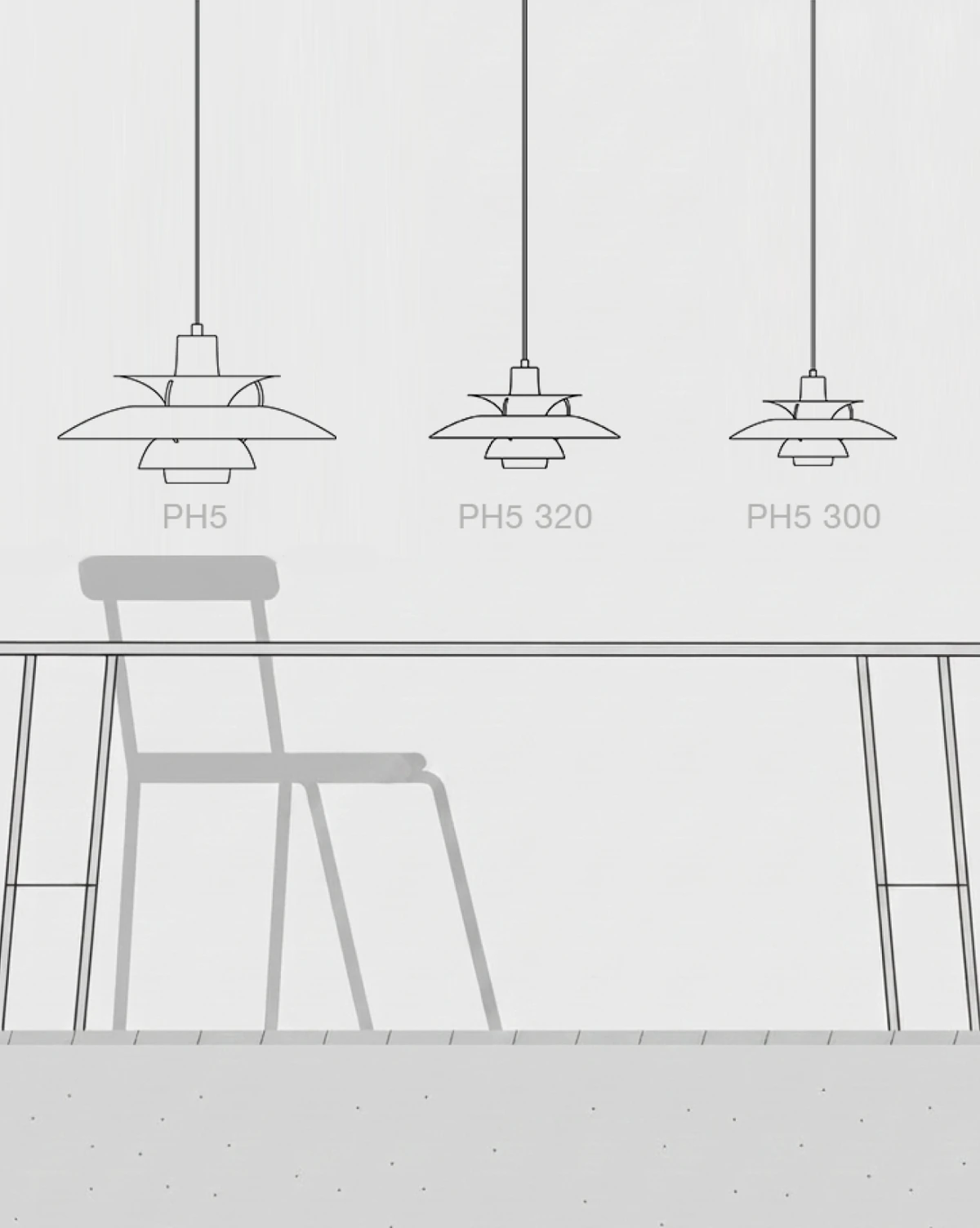
Known as the PH lamp, the iconic PH 5 design is based on Henningsen’s renowned three-shade system. The pyramid-like fixture effuses both descending and lateral light to illuminate itself. This ensures the light is soft, rich, and completely glare-free. The PH 5 initially incorporated shades in red and blue to improve the light’s color. However, in the latter designs, these were taken out as modern light sources replicate daylight more successfully than before. The classic PH 5 lamp remains a design favorite today, with several styles, hues, and shapes bringing characteristic lighting to any living space.
A pendant of notable design, the PH 5 is a much-loved and well-known lamp found in many homes worldwide. Different hues offer a dynamic gradient effect, making it the perfect addition to your dining room, hallway, or kitchen. Elevate your home with the PH 5 pendant from one of Louis Poulsen’s most credited designers. A design that transcends time and place – that’s what makes the PH 5 an icon.