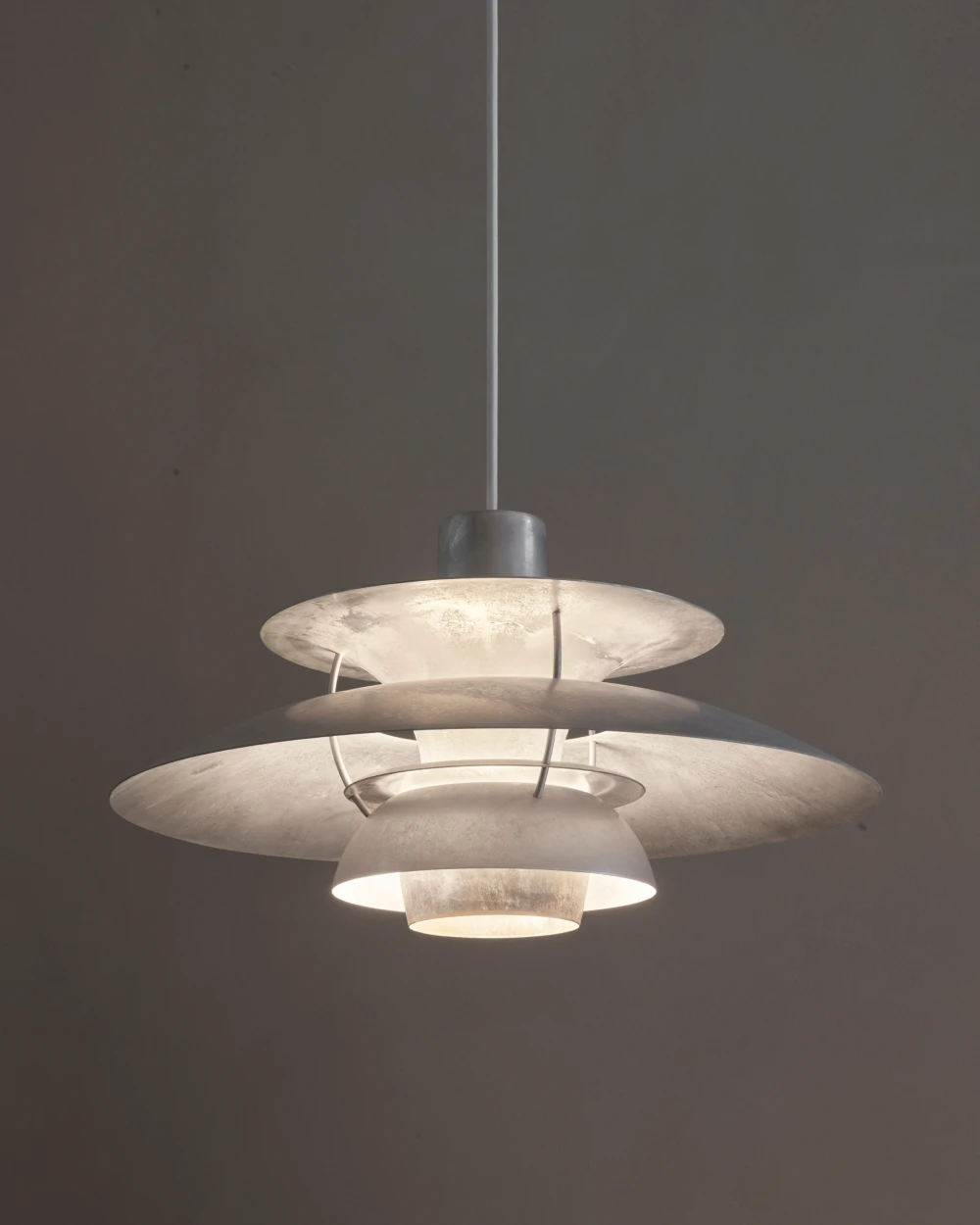
Diffusers, reflectors, and shades: What's the difference?
Diffusers, reflectors, and shades are three different ways to control lighting, and you’ll likely want a mixture of all three throughout your home, depending on what you want to achieve. Here’s a quick breakdown of each:
- Diffusers: A light diffuser is a material placed over the light source to soften its intensity. Its main purpose is to lower contrast, which reduces harsh shadows.
- Reflectors: Typically used in recessed cans, the material bounces and redirects light, creating a brighter, more focused beam.
- Shades: A protective covering around a light bulb that blocks glare from the bulb and directs light both up toward the ceiling and down toward the floor. Depending on the material, the shade can also act as a diffuser, allowing some light through from the sides.
How diffusers soften and spread light
The purpose of a diffuser is to reduce harsh glare and shadows, creating a more comfortable and relaxed space. Light passes through a material, such as fabric or frosted glass, which scatters the light and allows it to spread evenly across the space. Instead of seeing a beam of light directed at a small surface, you’ll see a much softer, wider glow across the surface.
Just don’t confuse this softer glow with dim, hard-to-see lighting. Diffused lighting can provide plenty of ambient illumination in a room. Light fixtures with diffusers work well for dining spaces, bedrooms, and living rooms—any spot where you need to layer in ambient lighting.
The role of reflectors in directing light
While diffusers aim to soften light, reflectors are intended to increase brightness and provide ample direct lighting to an area. A reflector shade is a cover—usually metal—fitted inside a light fixture. The surface is angled so that when light hits the surface, it bounces through the opening of the shade.
If you were to have a bare bulb, the light would disperse in every direction. But with a reflector shade, all that light is instead directed downward toward a specific spot, increasing the overall illumination. This is why reflectors are placed in recessed can lights, as well as pendant lights you might place above a kitchen island. They’re the perfect option if you need task lighting, especially in the kitchen and bathrooms.
How shades shape mood and control glare
Lamp shades can act similarly to both diffusers and reflectors and are commonly found on table and floor lamps. Lamp shade covers wrap around the bulb, preventing overly bright light and glare. Light is instead directed both upward and downward, but depending on the material, some light may pass through the sides, acting as a diffuser. If no light can pass through the shade, it will bounce off the sides and out the two openings.
The shape of the shade also plays an important role. A cylinder shade emits light equally out of the top and bottom, while a shade with a wider bottom will direct a wider beam of light downward. So, you’ll want to consider both the shape and material to control how much ambient light makes sense in a room.
Table and floor lamps with shades make sense in bedrooms, living rooms, and offices. But you can also have drum pendant lights in the kitchen and above dining tables.
Louis Poulsen's design philosophy: Glare-free, comfortable light
Proper light distribution is key to creating a comfortable, inviting atmosphere, whether you’re relaxing in the living room with a book or preparing dinner in the kitchen for your family. Louis Poulsen blends modern design with function and purpose. Each fixture is crafted to allow ample light that reduces glare, creating the perfect ambiance without eye fatigue.
See how Louis Poulsen's layered shades and diffusers create light without glare.
FAQ
What does a light diffuser do?
Diffused light means a material, such as fabric, is placed over a light to help soften its intensity and reduce shadows and glare. For example, fabric lamp shades act as a diffuser by not emitting all light from the bulb. Instead, only some of the light passes through the fabric. Light diffusing fixtures add ambient lighting to a space and are best used in bedrooms, living rooms, and dining rooms.
What is a diffuser on a ceiling light?
A diffuser on a ceiling light is a translucent or semi-transparent cover that helps reduce glare and shadows by scattering the beams of light in several directions. This helps create a wider, softer beam of light, as opposed to a small direct beam that you’d want for task lighting. Depending on the fixture, the diffuser can be made of fabric, acrylic, or frosted glass.
What can I use as a diffuser for light?
Light fixtures from Louis Poulsen already have diffusers built in to emit a comfortable, glare-free light. However, for other fixtures or if you need spare lighting parts, you can purchase light-diffusing acrylic, light panel covers, or ceiling light diffuser covers, which are usually made of fabric. Lamp shades and globes can also be used to help diffuse light.
Why does a lamp shade matter as much as the bulb?
Both the material and shape of a lamp shade affect how much light is distributed in a room. Some lamp shade materials diffuse and emit light from the sides, as well as from the top and bottom, while other materials completely block light from the sides. A shade with a smaller top opening and a wide bottom will project a larger, brighter beam from the bottom. Keep these details in mind when purchasing a shade.